


Let’s Talk
Schedule a call or contact us
Debt Recycling
What is Debt Recycling?
Debt recycling is a smart financial strategy that allows you to replace non-deductible home loan debt with tax-deductible investment debt. It’s a powerful strategy for paying off your home sooner AND building an investment portfolio at the same time.
For many Australians, it’s one of the most powerful ways to:
Reduce tax
Accelerate mortgage repayment
Grow an investment portfolio simultaneously
How Debt Recycling Works
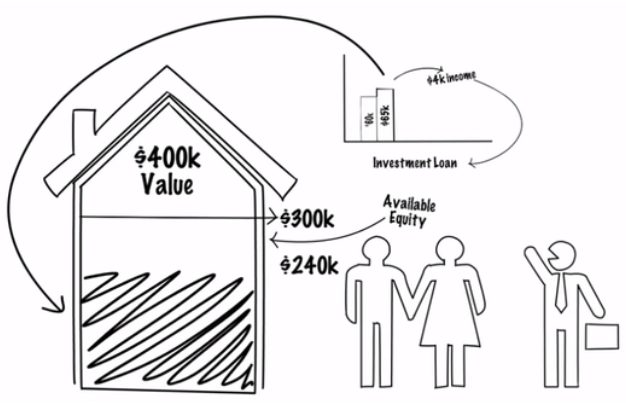
Step 1: Start with a home loan and available equity
You need a property with sufficient equity and stable income.
Step 2: Pay down part of your loan
Use savings, bonuses, or surplus cash flow.
Step 3: Split your loan
Create a separate investment loan split (critical for tax deductibility). This can be done utilising the extra repayments made in step 2, and/or supplemented with a loan increase against your home equity.
Step 4: Reborrow and invest
Invest into assets such as:
Shares
ETFs
Managed funds
Step 5: Repeat the process
Each cycle increases:
Tax-deductible debt
Investment income
Wealth accumulation
This process continues over years, often 7–15 years for full implementation, until non-deductible debt is completely cleared, and all that remains is a sizeable investment portfolio and tax-deductible debt.
Click on the video below to see an “illustration” of debt recycling in action.
A simple illustration of a debt recycling strategy, reducing home loan debt and reborrowing to build investments tax effectively
Key Benefits of Debt Recycling
Tax Efficiency
Interest on investment loans is generally tax-deductible (if structured correctly).
Faster Mortgage Repayment
Investment income + tax savings are redirected to reduce your home loan.
Earlier Investing
Instead of waiting 20–30 years, you start investing immediately.
Compounding Growth
The earlier you invest, the more time compounding works in your favour.
Even if you start slowly, the power of Debt Recycling is in the compounding or acceleration over time. The more you pay off your home loan debt, the more you can borrow to invest. And the more you borrow to invest, the more tax savings and additional investment income. It’s a snowballing effect.
Debt Recycling goes to the next level if:
You participate in an Employee Share Scheme
Have existing shares or managed funds
Or even an investment property that you’re considering selling.
Any of these can help you with a big initial debt recycle and immediate tax savings, which continue year after year.
Risks and Considerations
Debt recycling is not suitable for everyone. Key risks include:
Market volatility (investments can fall)
Interest rate increases
Cash flow pressure
Incorrect loan structuring (can void tax deductibility)
Who Is Debt Recycling Suitable For?
Stable, high-income earners
Disciplined savers who consistently save surplus cash
Long-term investors comfortable investing in growth assets
Those looking to accelerate reduction of their home loan, and intersted in building wealth outside of super
Where to start?
At AGS Financial Group, we offer comprehensive guidance on debt recycling. Our experts can help with:
Full strategy & tax efficiency planning
Mortgage reviews and split loan structuring
Investment selection & implementation
Personal accounting to get the right tax deductions
Ongoing management of your strategy and portfolio.
So get in touch with one of our financial planners for a free, no-obligation consultation to see how debt recycling can boost your financial future.
Related News Articles


Get in touch.
At every stage of your financial journey, AGS Financial Group provides the expert guidance you need to secure your future, all under the one roof.